Science

Summer 2
EYFS Science Focus: What’s Growing in Our Garden?
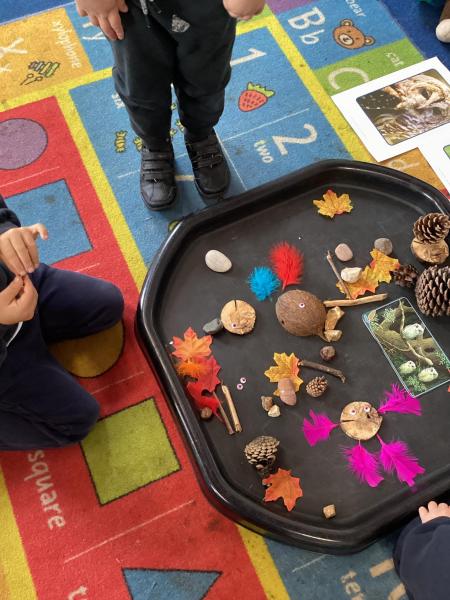
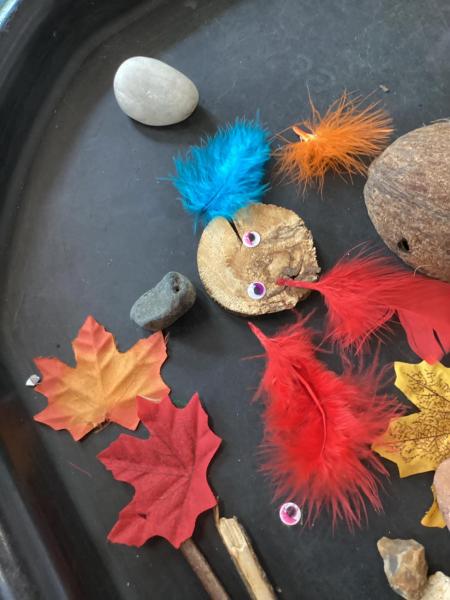
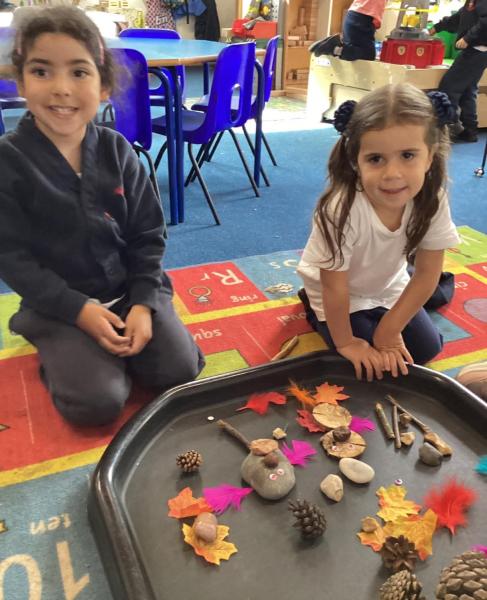
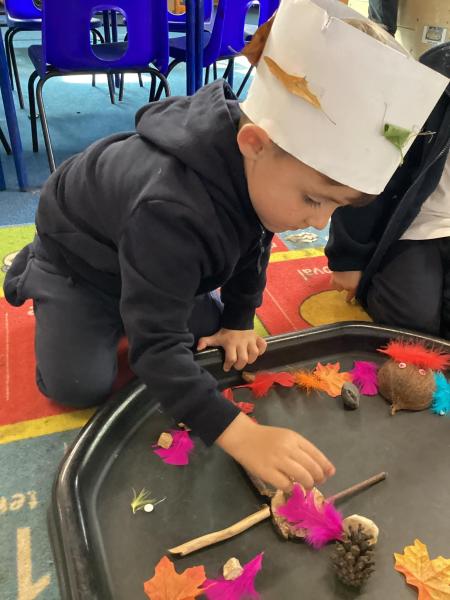
This half term, our young scientists are exploring the question “What’s growing in our garden?” Through sensory, hands‑on investigation, the children will use all their senses to explore natural materials and notice the wonderful details of the world around them. We’ll be comparing what we find in our own garden with plants and environments we’ve read about in class, helping the children build early understanding of similarities and differences in the natural world.
Summer 1
🌍 EYFS Science Focus: On the Move Through Nature🌿
This half term, our science learning is all about “On the Move Through Nature.” The children will be exploring how movement happens all around us — from the way our bodies jump and stretch, to how animals travel, how the wind blows objects, and how water helps things float and glide. We’ve also been watching plants grow and noticing how they slowly move and change over time. The children have loved investigating, predicting, and talking about what they notice, and it will be wonderful to see their curiosity and confidence grow as young scientists.
Spring 2
🌍 Science EYFS: Looking after our Planet
This term, our reception children will be learning about how we can help to look after our planet. Through stories, discussions, and hands-on activities, the children will explore ideas such as recycling, reusing materials, reducing waste, and caring for the natural world. Our continuous provision will offer plenty of opportunities for sorting materials, creating with recycled resources, and thinking about small changes we can make to protect our environment. We’re excited to see the children develop their understanding of how everyone can play a part in keeping our planet clean and healthy.
🔬 Science Scientists and Inventors – Year 1 & 2
This half term, the children will be learning about a range of inspiring scientists and inventors linked to our science curriculum. They will explore how waterproof materials were developed, including the invention of the waterproof coat, and will carry out simple tests to investigate which materials keep things dry. The children will also learn about the important work of doctors and discover the achievements of Elizabeth Garrett Anderson, the first woman to qualify as a doctor in Britain. As part of the unit, they will have the chance to design and create their own mini greenhouse, applying their scientific knowledge in a practical, hands‑on way.
Spring 1 2026
🌎 Science: Changing Materials
This term, our Reception children are exploring the fascinating world of materials and how they change. Through engaging stories like The Three Little Pigs and hands-on activities such as melting ice, mixing potions, and testing waterproof materials, children will develop their observation skills, scientific vocabulary, and curiosity about the world around them. Our creative continuous provision areas support their learning through play, encouraging exploration, experimentation, and critical thinking. We’re excited to see the children’s discoveries and growth as they investigate reversible and irreversible changes in everyday materials!
🌞 Science: Seasonal Changes
Year 1 and 2
In this unit, children will explore seasonal changes with a focus on spring and summer. They will learn about the differences between these seasons and begin to understand how changes occur across all four seasons.
Children will take part in a nature walk to observe seasonal changes first-hand and will learn what weather is and how it differs throughout the year. They will also observe, record and collect simple weather data.
‘Working scientifically’ skills are embedded throughout the unit, including making observations, using simple equipment and gathering information. A Knowledge Organiser supports learning by bringing together key vocabulary and concepts, and Reasoning Cards are used to encourage deeper thinking and discussion in science.
Autumn 1 2025
Nocturnal Animals EYFS
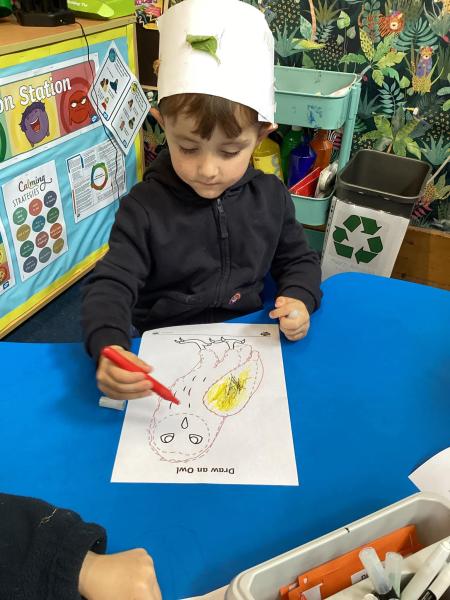
This topic will help children to learn about nocturnal animals. They will learn about owls, bats, hedgehogs, badgers, foxes and moths and how they have adapted to be able hunt at night. ‘Nocturnal Animals' will encourage children to achieve the aims through exploration of the natural world, through games and through
craft activities. The children will be working in teams and as a class.
Aim:
To know what a nocturnal animal is.
To know how nocturnal animals
have adapted to the night.
To be able to use senses to identify
natural objects.
I can explain what a nocturnal animal is and how it is has adapted to the night.
Success Criteria:
I can say what a nocturnal animal is.
I can describe three ways that nocturnal animals have adapted to the night.
I can use my senses to describe and identify natural objects.
Living things and their natural habitat Y1/2
In the Y1 Plants and the Y1 Animals including Humans units, children have learnt to identify, name, compare and classify a variety of plants and animals. They should be able to name some plants, including deciduous and evergreen trees. They should also be able to name some common mammals, fish, birds, reptiles and amphibians and know that some are carnivores, some are herbivores and some are omnivores.
Learning Objective
To compare the differences between things that are alive, used to be alive and have never been alive.
Success Criteria
I can group living and non-living things.
I can identify things that are alive, used to be alive or have never been alive.
I can explain how I know something is alive, used to be alive or has never been alive.
Autumn 1
This term’s topic is about Animals including Humans. Children will learn about five of the groups that scientists use to classify animals:
- Mammals
- Fish
- Birds
- Reptiles
- Amphibians.
They will learn to identify the group an animal belongs to by its features and will classify animals according to their group. They will also learn about the different diets animals eat.
.jpg)
Children will learn about the parts of the human body and have the opportunity to explore the five senses through a simple investigation. In the final lesson, children will use all their knowledge from this unit to classify animals according to their own criteria.
.jpg)
Autumn 2
‘Every Day materials’
This terms topic ‘Everyday Materials’ will teach your child about everyday materials including wood, plastic, metal, water and rock. Children will learn to identify and name everyday materials and will have the opportunity to explore the properties of these materials. Children also will carry out a simple investigation to help them decide which material would be most suitable to use for an umbrella. At the end of the unit children apply their knowledge of everyday materials to sort objects by their properties. A range of learning activities are used in this unit including, discussions, labelling and matching activities, games, and an investigation to encourage where children have the opportunity to ask and find the answers to questions.


Spring
Seasonal Changes – Spring and Summer
This Seasonal Changes (Spring and Summer) unit will teach your child all about spring and summer. Your child will learn about the
changes that can be seen between spring and summer, as well as across all four seasons. They will go on a nature walk to observe
some of these changes. They will learn about what weather is and the weather that is associated with each season. They will
observe and collect data about the weather. ‘Working scientifically’ and enquiry skills are incorporated throughout the unit, including
using simple equipment, making observations and gathering data.
.png)